TL;DR Link to heading
I pay by card wherever a shop takes one, use an eSewa wallet topped up from Revolut for the many places that only take Fonepay QR codes, and keep a little cash for the rest. I opened the eSewa wallet as a foreign passport holder by doing the KYC (identity verification) in the app with photos of my passport and visa. My first Revolut transfer landed as Rs50,000 within a couple of minutes for Revolut’s fixed £1.10 fee (about 0.44% of this transfer). So far I’ve found this cheaper and less nerve-wracking than pulling cash out of Nepali ATMs with a UK card, and I’d recommend it if you’re spending a considerable amount of time in Nepal.
Motivation Link to heading
On trips to Nepal I used to withdraw cash from ATMs with a foreign card. I paid a local ATM fee on each withdrawal, made several trips to the machine because of the per-withdrawal limit, and ended up walking around with a wad of notes. eSewa is one of Nepal’s biggest digital wallets: a phone app that holds rupees and pays by scanning a QR code. Most places I pay at now show a Fonepay QR code, which works across Nepali banking apps and wallets, and the eSewa app can scan and pay any of them, so I wanted the money in the wallet rather than in my pocket.
Revolut can send money to Nepal, and eSewa wallets accept loads from Nepali banks, so I tried pointing one at the other. Khalti is the other big Nepali wallet and also pays Fonepay QR codes, but I haven’t tried it. When I set up the transfer, Revolut only offered eSewa as a wallet option for Nepal, so that settled it for me.
Before you land Link to heading
eSewa won’t help with the first payment of the trip. The visa on arrival fee at the airport needs foreign currency. The fee is set in US dollars, but the counter also takes GBP and other major currencies in cash, converted from the dollar price. The person at the payment counter told me I could pay by card, but with a 15% surcharge, which seemed extraordinary. I didn’t challenge it, so I can’t say whether that’s official. We’d filled in the online visa application form before the flight but hadn’t brought any cash, so we ended up queuing for the airport ATM before we could pay. In hindsight I wish I’d brought the fee in cash and skipped that queue. The immigration department also runs an online visa fee payment you can use before the flight. I looked at it, but it added an extra fee on top, so I didn’t go through with it.
I also wish I’d set up eSewa before I flew. I doubt I could have finished it, though: I registered with a Nepali SIM, and the KYC asks for the Nepali visa, so both steps seem to need you in the country. Installing the app and reading through the KYC form beforehand might still have saved me some time after landing.
Opening the eSewa account Link to heading
I’d assumed I’d need a Nepali citizenship certificate or a visit to an office to open a wallet. I did the whole thing in the eSewa app instead:
- Install eSewa and register with a phone number that can receive an SMS code. I used a local SIM.
- Open the KYC form from the profile section and fill in your personal details and address.
- Pick passport as the identity document and upload photos of the photo page and your Nepali visa.
- Take the selfie the app asks for and submit.
For the local SIM I went with Ncell, which has decent data packages. Ncell also has a partnership with Himalayan Java, a coffee chain with branches all over the place. At the time of writing, customers on a Rs499 pack or above get buy one, get one free on drinks, which you show through the Ncell app at the till.
I didn’t have to talk to anyone for eSewa to verify me. eSewa caps unverified wallets at a lower limit, so I’d finish the KYC before sending money from abroad.
The transfer Link to heading
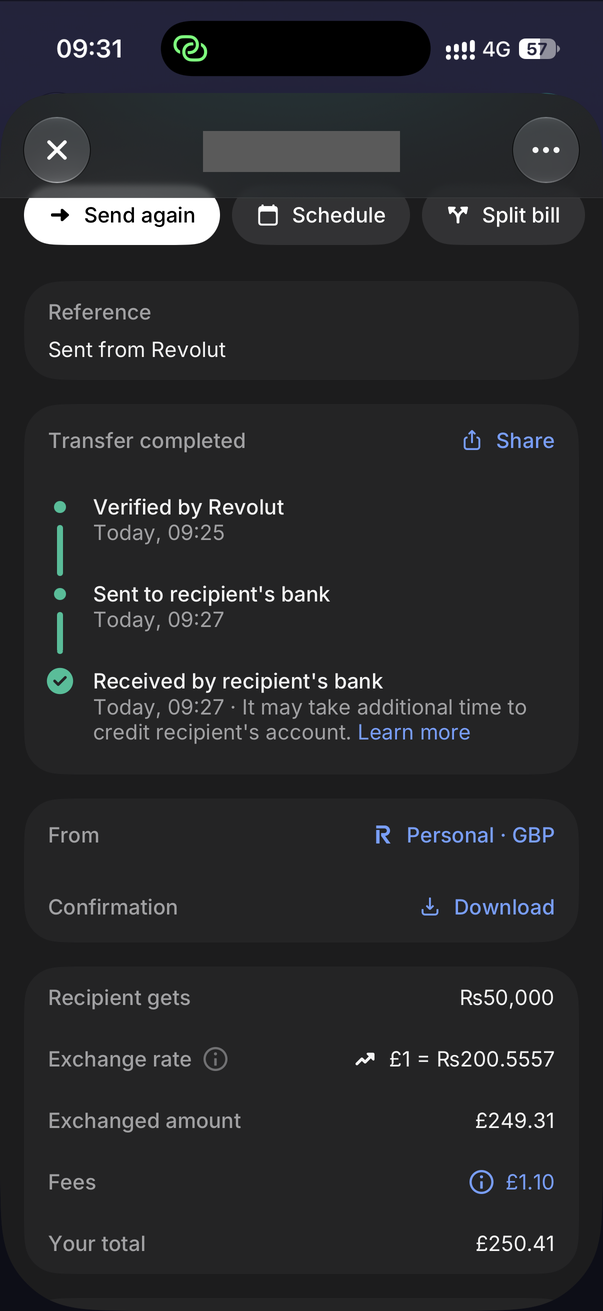
In the Revolut app I added a new recipient in Nepal with my eSewa wallet details and my name as it appears on the eSewa account. I’d double-check the name, since the receiving side matches on it. Then I entered the amount in NPR and let Revolut work out the GBP side.
The confirmation showed:
| Recipient gets | Rs50,000 |
| Exchange rate | £1 = Rs200.5557 |
| Exchanged amount | £249.31 |
| Fees | £1.10 |
| Total | £250.41 |
Revolut marked the transfer as received by the recipient’s bank about two minutes after verifying it.
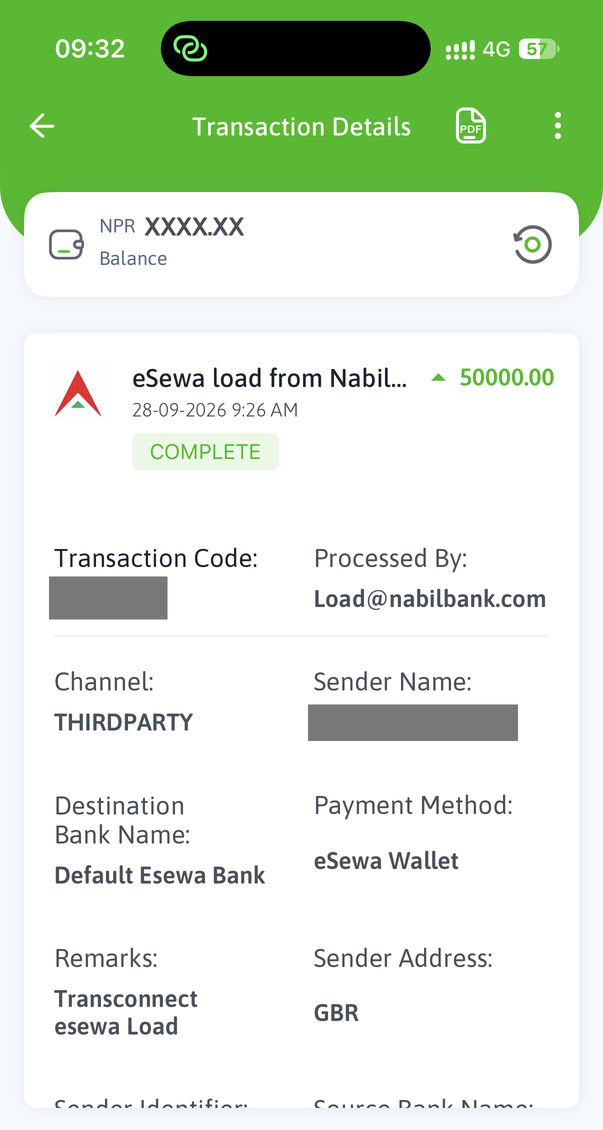
In eSewa I saw a completed wallet load from a Nepali partner bank, with the channel listed as a third-party load. I didn’t have to accept anything on the eSewa side.
Why I prefer this to cash Link to heading
- Cost. Nepali ATMs have charged me up to Rs625 per withdrawal, with a Rs20,000 cap on each one. Getting Rs50,000 in cash takes three withdrawals and up to Rs1,875 in fees. Revolut charges a fixed £1.10 per transfer whatever the amount, which came to about Rs220 at my rate, or 0.44% of Rs50,000.
- Safety. I keep the money in the wallet instead of in my pocket, and on my iPhone I authorise each payment with Face ID. Fonepay QR codes are everywhere in Nepal, so I can pay by scanning in most shops I go to and in most taxis.
- Traceability. Both apps give me a record with a transaction reference, which beats a stack of notes.
On those numbers, one Revolut transfer costs about a third of one ATM fee, so the transfer comes out cheaper at any amount I’d withdraw. In percentage terms, a maxed-out Rs20,000 withdrawal costs about 3.1% in fees, and Revolut’s £1.10 only climbs that high on a top-up below about Rs7,000. I’ve left the exchange rate out of this, since Revolut’s transfer rate and the rate my card gets at an ATM differ a little.
eSewa hasn’t replaced my card, though. I still pay by card wherever a shop takes one, and most places that take cards seem to accept both Visa and Mastercard. Card is my first choice since that avoids any eSewa transaction fee, and neither Monzo nor Revolut charges me for spending on the card abroad. A few shops in Nepal add a 3% surcharge for foreign cards, so at those I switch to eSewa. Fonepay covers most of the places that don’t, and I keep a little cash as a backup for the few that haven’t adopted either.
For a few days in the country, I doubt the account setup is worth it and I’d stick with cash. For a longer stay, I’d set up the wallet in the first few days and top it up from Revolut as I go.
A few caveats from my own use. Revolut can add a markup to its rate at weekends and above your plan’s monthly allowance, so I’d send on a weekday if the timing doesn’t matter. eSewa sets wallet balance and load limits by KYC level, so check yours before sending a large amount. At the time of writing, Rs50,000 is the most I can send in a single transfer, so a bigger top-up means several transfers and £1.10 on each. I’ve done this once, so I can’t say how it behaves on bank holidays. I also don’t know what happens to the KYC once the visa I uploaded expires. eSewa’s KYC guidance asks for documents that haven’t expired, but I haven’t found anything on whether it downgrades the wallet or asks for a new visa on the next trip. I’ll update this post when I find out.
eSewa charges for some payments, depending on where the money goes. Its tariff page lists eSewa-to-eSewa transfers under Rs100 as free, and anything above that as free for three a day and 30 a month, then Rs10 each. Some shops show their bank’s own QR code instead, and paying one of those counts as a transfer to a bank account, which costs a flat Rs10 each time. As far as I can tell, paying a shop’s business QR costs the buyer nothing. I make around five payments a day, and most are over Rs100. Bank QRs are rare for me, so the eSewa-to-eSewa allowance is the limit that matters. If they all went to other eSewa wallets, I’d pay Rs10 on two of them a day for the first 10 days, and on all five once the 30 free payments a month run out. That works out at about Rs1,200 a month, not far off the Rs1,875 in ATM fees for Rs60,000 of cash. I do go over three a day most days, so I pay some of these fees, though the free business QR payments keep it below that worst case. On top of those, I make a few card payments a day, which cost me nothing. Even with the odd Rs10, I’d take that over carrying cash around.